A thermos that smells like yesterday's coffee rarely needs a miracle cleaner. The body is the easy part; lids, threads, silicone seals and small channels are where moisture and drink residue tend to remain. In daily use, a gentle routine after every drink usually matters more than an aggressive monthly deep clean.
The two-minute after-use routine
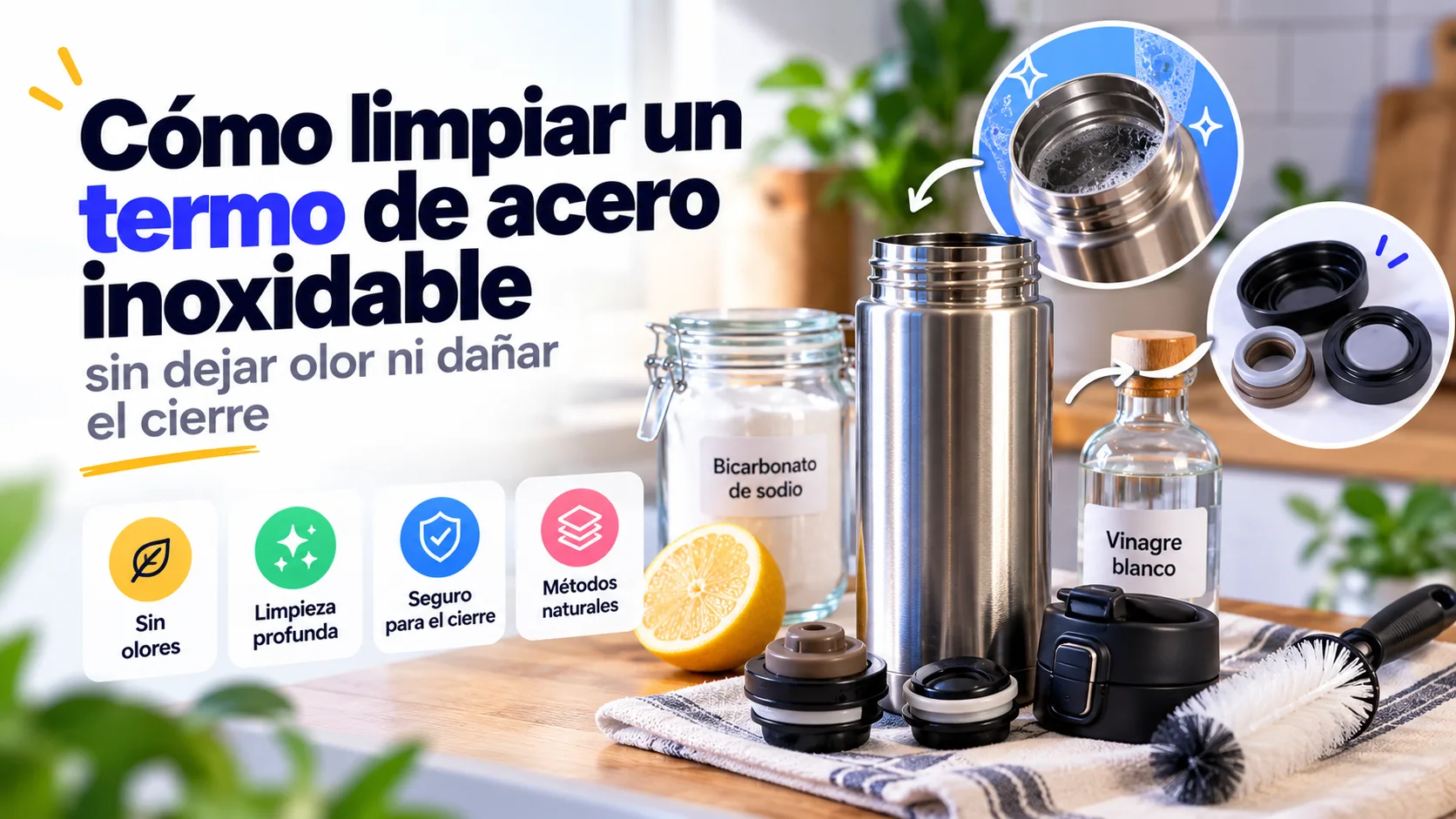
Empty the thermos as soon as you can, rinse it with warm water and wash with mild detergent. If the lid has parts that are removable according to the manufacturer, separate them. Thermos specifically highlights lid grooves and gaskets as places where moisture and residue can remain. Let the body dry open and the lid separately.
Do not store it closed while damp
The mistake that creates the most odor is washing, putting the lid on and storing the thermos closed while it is still damp. After drying it upside down for a while, let it finish airing without the lid on.
For stubborn coffee or tea residue
Start with warm water, detergent and a bottle brush that reaches the bottom without scratching. If stains remain, check the model manual first before using baking soda, tablets or any stronger method; materials, coatings and lids are not identical.
Inspect the gasket
If the manufacturer allows you to remove it, clean both sides and the channel where it sits. Put it back correctly: a twisted gasket can turn a cleaning problem into a leak.
Dishwasher? The model decides
There is no universal rule. Some current Thermos products allow the dishwasher with specific instructions, while other manufacturers or models may require hand washing. Look up the sheet for your exact reference, including the lid.
What I would avoid
I would not scrape the interior with metal or improvise with corrosive products. I also would not mix household cleaners. If the odor persists after cleaning the lid, gasket and body separately, I would check whether a part is holding dirt or needs replacement.
A practical sign the routine is working
When you open a completely dry thermos the next day, a strong damp smell should not appear. If it does, go back to the lid and gasket before blaming the steel.
Practical takeaway
Change one variable at a time before replacing the bottle: cleaning, gasket position, fill amount, starting temperature or use pattern. Follow the exact model instructions. For perishable food and drinks, measured temperature and current food-safety guidance matter more than how warm or cold the container feels.