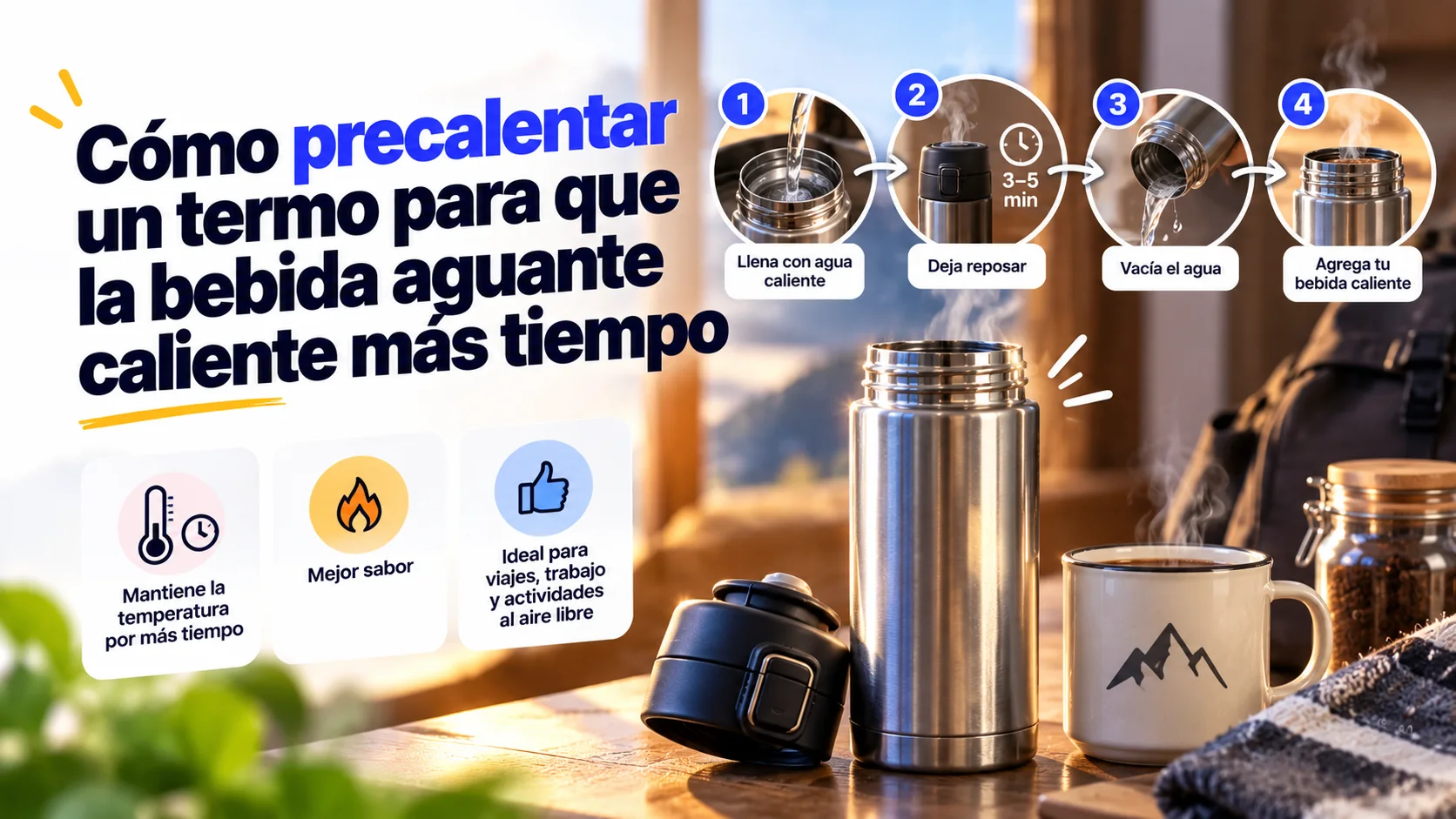
Pouring hot coffee into a cold vacuum bottle means some of the drink's energy first warms the inner wall. Preheating does not create extra heat; it reduces that initial temperature drop and can be particularly useful with smaller fills or cold mornings.
The basic method
Check your model’s instructions first. In a thermos designed for hot liquids, you usually fill it temporarily with hot water, let the interior warm, empty it and immediately add the drink.
You do not need to wait half an hour
The goal is to warm the inner wall, not to cook the thermos. Follow the time recommended by the manufacturer if it specifies one.
Fill it close to the time you leave
Preheating and then leaving the thermos open while you do other things wastes part of the advantage. Prepare the drink and close it correctly.
Fill volume matters
A nearly empty thermos usually loses useful temperature faster than one filled properly because there is more air and less thermal mass of drink. Never go past the fill line or space indicated by the manufacturer.
Repeated opening costs heat
Each serving exchanges hot air for ambient air. If you take small amounts over hours, a lid that lets you pour without opening fully can help, depending on the design.
Do not confuse preheating with reheating
A thermos is mainly meant to preserve, not to heat a drink that has already cooled. Put the contents in at the temperature appropriate for their intended consumption and use.
Run your own test
If you want to know your model, measure the starting temperature and then after 2, 4 and 6 hours under repeatable conditions. That test is worth more for your routine than a generic number from the internet.
Practical takeaway
Change one variable at a time before replacing the bottle: cleaning, gasket position, fill amount, starting temperature or use pattern. Follow the exact model instructions. For perishable food and drinks, measured temperature and current food-safety guidance matter more than how warm or cold the container feels.