Older advice often says never to put a vacuum bottle in a dishwasher, while some current product pages explicitly label particular models dishwasher safe. Both can be true because finishes, lids and construction differ. The correct answer is model-specific.
Look up the exact model, not just the brand
The same brand can sell families with different instructions. Check the body, lid, straw and gaskets separately.
“Dishwasher safe” can include conditions
It may specify a top rack, avoiding high-temperature dry cycles or removing components. Thermos, for example, publishes specific instructions for certain products.
The lid is usually the complicated part
Internal channels need to be exposed to water and then dried. Putting a closed lid in the dishwasher does not guarantee that every area gets clean.
Exterior finish
Even if the interior survives, certain coatings or prints can have specific recommendations. If you care about the finish, check the manual.
Hand washing is still simple
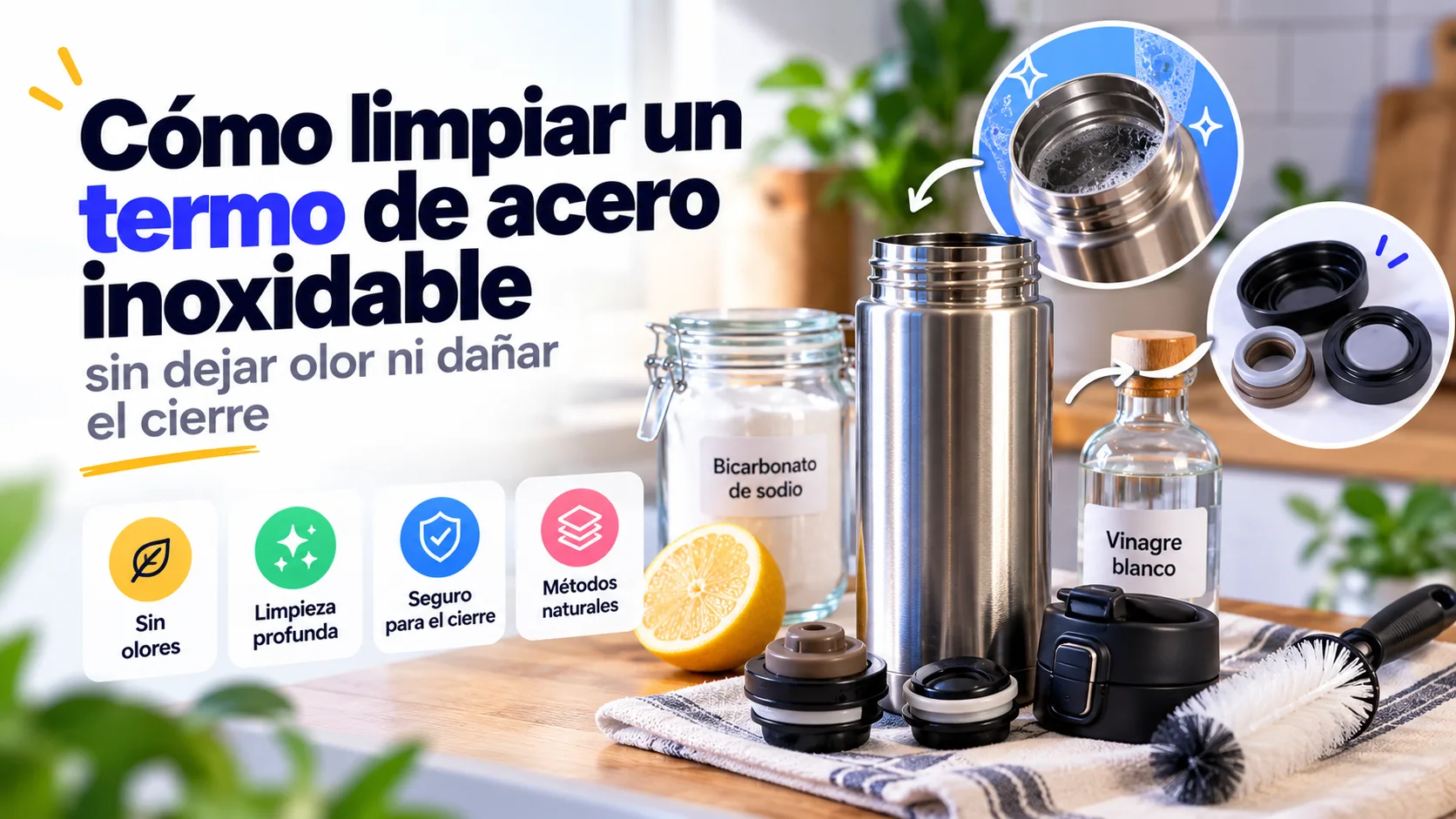
Warm water, mild detergent, a non-abrasive brush, rinsing and open drying work for many thermoses when the manufacturer specifies hand washing.
Do not guess from the material
Stainless steel does not mean every other part tolerates the same treatment.
Keep the digital manual
A photo of the model label on the first day makes it easier to find the right instructions and spare parts years later.
Practical takeaway
Change one variable at a time before replacing the bottle: cleaning, gasket position, fill amount, starting temperature or use pattern. Follow the exact model instructions. For perishable food and drinks, measured temperature and current food-safety guidance matter more than how warm or cold the container feels.